
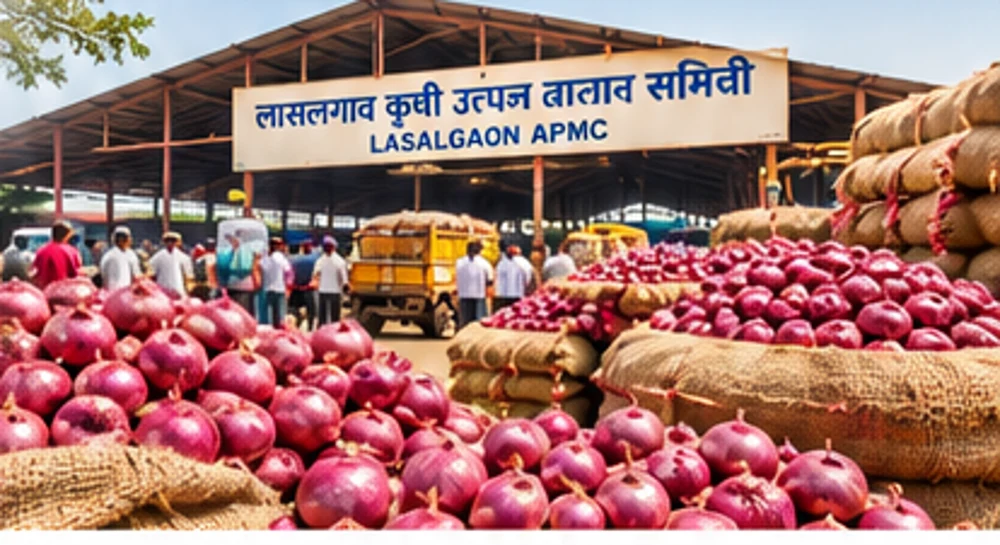
When people talk about India’s onion trade, Nashik is one of the first regions that comes to mind. Located in Maharashtra, Nashik has built its agricultural identity through onion cultivation, established wholesale markets and links to India’s wider agricultural supply chain.
From farms around Niphad and Yeola to the trading centres of Lasalgaon and Pimpalgaon Baswant, the Nashik onion belt plays an important role in the journey from field to market.
Why does this region matter to food manufacturers and buyers of dehydrated ingredients? Understanding its agricultural ecosystem can help businesses assess sourcing opportunities, quality requirements and supply reliability.
1. Why is Nashik important to India’s onion industry?
Nashik is among Maharashtra’s prominent onion-producing districts. Its significance comes not only from cultivation, but also from a network of agricultural markets, traders, storage facilities, transporters and wholesalers.
Areas including Niphad, Yeola, Sinnar and Chandwad are associated with onion farming in Nashik. The district is part of a much larger state-wide production and trading system.
Multiple farming areas and onion-growing seasons
Trade and price discovery across key APMCs
Trading, handling, transport and distribution
The onion production data for Maharashtra describe the entire state. They should not be presented as production figures for Nashik district alone.
2. Maharashtra onion production: the larger picture
According to the Government of India’s Agricultural Statistics at a Glance 2024–25, Maharashtra produced approximately 13.56 million tonnes of onions in 2024–25, representing around 44% of India’s estimated onion production.
2024–25, third advance estimates
This is Maharashtra’s share, not Nashik’s
These numbers establish Maharashtra’s importance to the Indian onion supply chain. Nashik contributes as one of the state’s recognised cultivation and trading centres, alongside other onion-growing districts.
For commercial buyers, production statistics give valuable context but do not replace supplier qualification, product specifications or reliable delivery arrangements.
3. Lasalgaon, Pimpalgaon and Nashik’s onion markets
The district’s agricultural marketing infrastructure helps connect onion growers with traders, commission agents, wholesalers and institutional buyers. Three important markets and trading locations deserve attention. The term Nashik onion market refers to this wider network of trading centres, not one single venue.
Lasalgaon APMC
The Lasalgaon onion market is one of India’s prominent wholesale onion markets and a centre for price discovery. Its market arrivals and transactions offer useful context for commercial procurement planning.
Pimpalgaon Baswant
Pimpalgaon Baswant is another significant agricultural trading centre in Nashik district, contributing to the movement and marketing of onions and other farm produce.
Yeola and surrounding markets
Yeola and other agricultural centres support the broader trading network, connecting producers, intermediaries, transporters and buyers.
Wholesale market prices are not the same as the delivered price of a ready-to-use industrial ingredient. Grading, losses, handling, packaging, transport and quality specifications affect the final cost.
4. Understanding onion growing seasons in Maharashtra
Seasonality is central to onion sourcing in Maharashtra. The three principal growing cycles are kharif, late kharif and rabi. The approximate harvesting windows below are indicative and may shift with location, rainfall, variety and planting schedules.
| Crop season | Approximate harvest | Procurement relevance |
|---|---|---|
| Kharif | October–December | Early-season arrivals; quality and storage characteristics vary |
| Late kharif | January–February, sometimes March | Additional supply ahead of the main rabi harvest |
| Rabi | March–May, sometimes June | Important harvest for subsequent storage and market supply |
Why does the rabi crop matter?
Rabi onions play an especially important role in India’s onion supply chain. Harvested mainly between March and June, properly cured and stored rabi onions can help supply markets in later months.
Storage suitability still depends on variety, maturity, curing, moisture, handling and warehouse conditions. No crop season automatically guarantees a particular shelf life.
Dehydration reduces moisture and can help enable longer storage, but the price and availability of dehydrated onion may still be influenced by raw-onion harvests, processing capacity, inventories and demand.
5. Does growing region influence onion quality?
Yes—but geography alone does not determine ingredient quality. The characteristics of fresh onions vary with variety, climate, soil conditions, irrigation, harvest maturity and post-harvest practices.
Bulb size, colour, pungency and storage behaviour may differ across varieties and seasons.
Crop maturity, drying, handling and storage influence usable quality after harvest.
What about Nashik red onion?
Nashik is closely associated with red onion cultivation and trading. But not every Nashik red onion has the same flavour, moisture, pungency, colour or storage properties.
A variety suited to fresh consumption may not be ideal for every dehydration process. Food manufacturers should select raw material—or the finished dehydrated ingredient—according to the intended formulation and verified specifications.
6. From onion farming to dehydrated food ingredients
Fresh onions move through a larger value chain that may involve growing, trading, sorting, storage, processing and packing. Some are sold for fresh use; others are converted into processed food ingredients.
Commercial dehydrated onion formats include onion powder for uniform dry seasoning blends, onion flakes for visible pieces in selected recipes, and onion granules where a coarser particle size is preferred.
Where onions are cultivated and harvested
Where produce is dried, graded or milled
Where batches are packed and dispatched
These locations are not necessarily the same. A supplier operating in Nashik does not automatically mean its dried ingredients were grown, dehydrated and packed within Nashik district.
For industrial buyers, traceability documentation and finished-product quality are more useful than assumptions based only on a supplier’s address. When evaluating a dehydrated onion supplier in India, verify the actual processing source and batch documentation.
7. What should bulk onion buyers look for?
Businesses evaluating onion suppliers in Nashik or planning onion sourcing in Maharashtra should distinguish the requirements for fresh produce from those for processed ingredients.
For fresh onion procurement
- Required variety, size and grading.
- Harvest maturity, curing and storage condition.
- Packaging, transportation and handling losses.
- Supply consistency and agreed rejection criteria.
For dehydrated onion procurement
- Moisture content and particle or mesh size.
- Colour, aroma, pungency and foreign-matter limits.
- Microbiological quality and relevant test reports.
- Batch traceability and suitable moisture-barrier packaging.
- Reliable delivery schedules and agreed product specifications.
A practical sourcing comparison
A manufacturer purchasing fresh onions for cooking might focus on variety, bulb size, handling and preparation yield. The same company purchasing dehydrated onion powder for snack seasoning may focus instead on particle size, moisture, flavour intensity, microbiological quality and batch consistency.
Fresh produce and dehydrated ingredients may come from the same crop, but they require different supplier-approval criteria.
Questions to ask before approving a supplier
- Are product specifications and batch identifiers available?
- Can the supplier document origin and traceability?
- Can representative samples be tested in the formulation?
- Are relevant quality and food-safety reports available?
- What are the MOQ, packaging and delivery terms?
- How does the supplier handle shortages and complaints?
8. Conclusion: Nashik’s role in India’s onion supply chain
Nashik’s strength in the onion sector comes from its farming activity, wholesale markets and connections with Maharashtra’s larger supply network. Lasalgaon, Pimpalgaon Baswant and surrounding agricultural areas remain important reference points for understanding the region.
For food manufacturers, however, regional sourcing knowledge is only the starting point. A dependable ingredient supply arrangement also requires suitable quality specifications, documentation, traceability and delivery performance.
At FarmVero, based in Nashik, Maharashtra, we focus on sourcing and supplying dehydrated ingredients for food businesses and bulk buyers.
Learn more about fresh versus dehydrated onion, explore how drying temperature affects onion quality, or browse FarmVero’s product range. For specific sourcing requirements, contact our team.